
31°C, New York


Notification products, updates
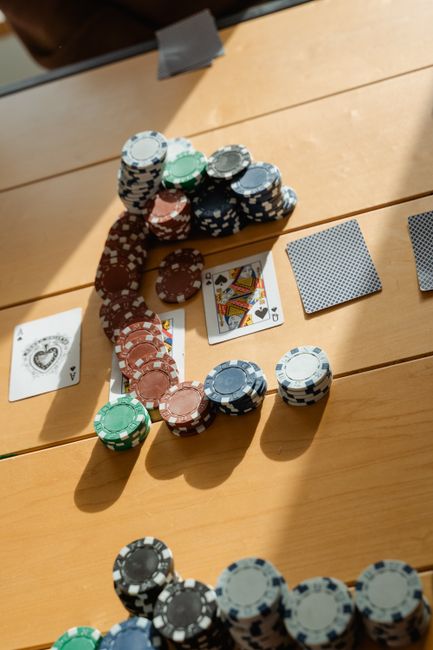
Step into any casino, physical or digital, and you'll notice something curious: the people having the most fun are rarely the ones chasing a jackpot. They're the ones who understand the math, set a limit, and treat the whole thing like a night at the movies with a chance of a payout. That paradox sits at the heart of iGaming. It's a billion-dollar industry built on games where the odds favor the operator, yet millions of rational adults keep coming back. The reason isn't stupidity. It's entertainment, adrenaline, and in some games, genuine skill.
Let's break down how the modern iGaming world actually works, from slots to poker tables, and where a smart player can find real value.
Every game in a casino, online or off, carries a built-in edge for the house. That's not a secret or a scam; it's the business model. What separates one game from another is how big that edge is and how fast it grinds your bankroll down.
Take slots, the undisputed king of online casino traffic. A modern video slot might have a return-to-player rate of 96%, meaning for every $100 wagered over millions of spins, the machine pays back $96. The 4% difference is the house edge. That sounds tiny, but if you're spinning $2 a pull and racking up 500 spins an hour, you're theoretically losing $40 an hour in expected value. Some slots are far worse, with RTPs sitting around 92% or even lower. Others, particularly certain high-volatility titles, push past 97%.
Table games tell a different story. Blackjack with basic strategy can get the house edge under 0.5%. Baccarat's banker bet hovers around 1.06%. Even roulette, that icon of casino romance, sits at 2.7% on a European single-zero wheel. Compare that to the 4-8% you'll typically bleed on slots and it becomes clear why serious players gravitate toward cards and felt.
Here's the hard truth about slots: there is no system, no hot machine, no cold streak that predicts the next spin. Random number generators don't have memory. Each spin is independent. If a slot hasn't paid out in three hours, that tells you nothing about the next minute. สล็อตเว็บตรง goes into the finer points.
What you can control is how you play. A few practical points:
Slots are the popcorn of iGaming: cheap, fun, and designed to keep you snacking. Treat them that way and you'll enjoy them a lot more.
Poker is the great exception. In the long run, a skilled player can genuinely beat the game, because you're not playing against the house. You're playing against other people, and the house just takes a small cut of each pot, known as the rake.
That single structural difference changes everything. It's why professional poker players exist and professional slot players don't. But it also means the learning curve is brutal.
A few things every beginner should internalize:
Online poker rooms like those on major international networks run everything from micro-stakes games for a few cents to high-roller tournaments with six-figure prizes. The accessibility is unmatched, but so is the competition.
Sports betting has exploded in recent years, particularly in jurisdictions that have legalized it. The appeal is obvious: you get to combine your passion for a sport with a potential payout. But the bookmaker's edge, or vig, typically sits around 4-5% on a standard two-way market, and sharp bettors exploit soft lines that bookmakers occasionally post.
Success in sports betting comes down to three things: information, discipline, and shopping for the best odds. Losing bettors tend to bet with their hearts, chase losses, and take whatever price is offered. Winning bettors compare odds across multiple books, focus on niche markets, and reject most of the bets they consider.
If you're new to it, start small. Treat your first hundred bets as tuition. Learn how line movement works, why closing odds matter, and how to spot value rather than picking winners.
The iGaming industry is only as trustworthy as the regulators behind it. Licenses from bodies like the UK Gambling Commission, Malta Gaming Authority, or various US state boards carry real weight. They enforce fair play, require audited RNGs, and mandate responsible gambling tools. If a casino or sportsbook doesn't clearly display its license, walk away.
Other signs of a legitimate operator:
Offshore casinos without real oversight are a gamble in themselves, and not the fun kind.
Here's the thing nobody tells you when you sign up: the house edge is not your enemy. It's the price of admission. You wouldn't walk into a cinema and complain that the ticket cost money. The mistake is confusing entertainment spending with an investment strategy.
The players who get the most out of iGaming over years, not weeks, are the ones who treat it as a hobby with a fixed budget, learn the games they play, and never chase a loss. They know that slots are a lottery ticket with better music, poker is a chess match against strangers, and sports betting is an information market. They play with money they can afford to lose, and they walk away when it stops being fun.
That's not a boring approach. It's the only one that actually keeps the game enjoyable.

Mellow Digest shares practical, down-to-earth guidance on gentle gut health and calming everyday cooking for readers across the UK.
Stay Tuned With Updates


Leave A Comment